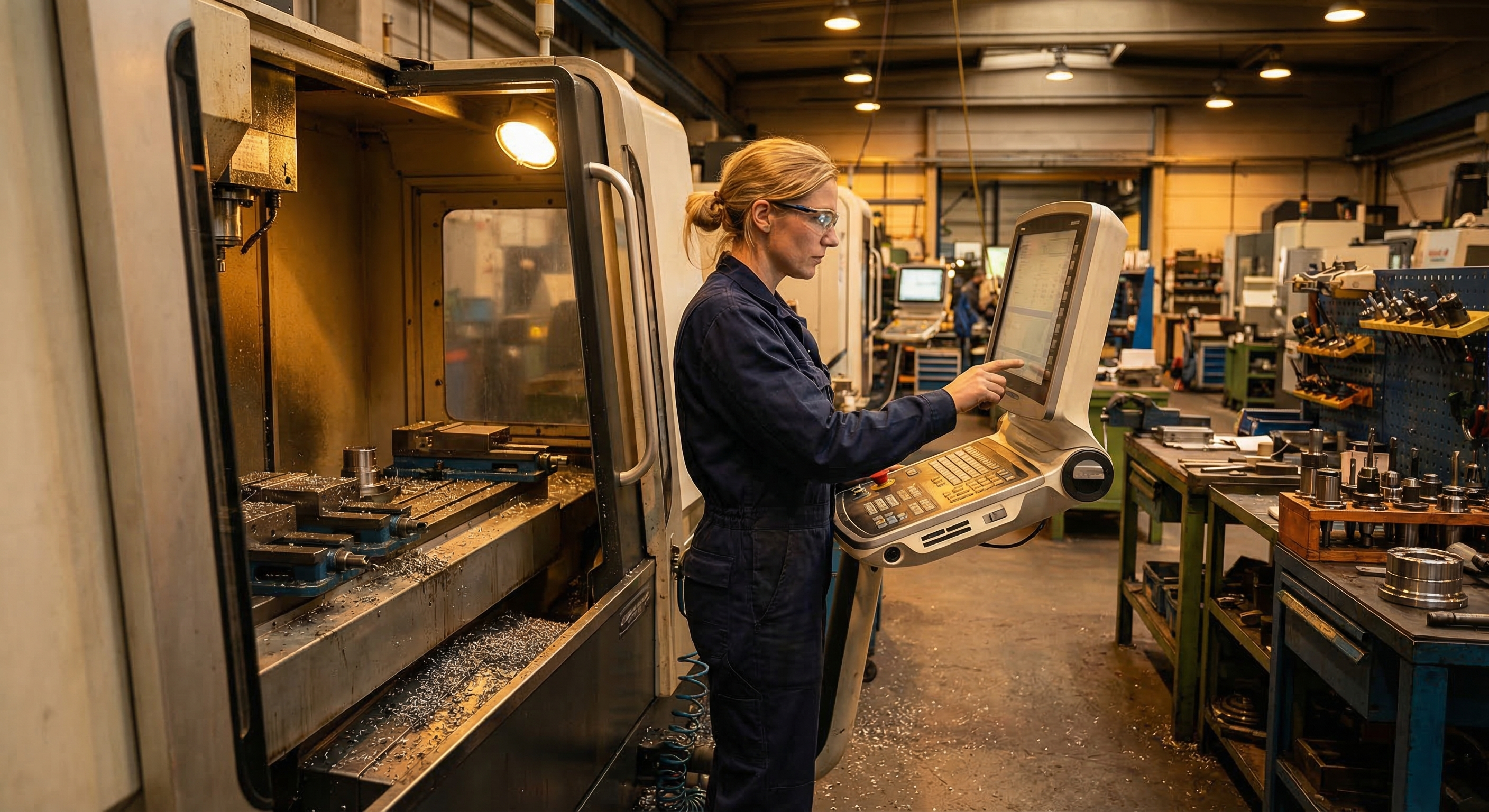
Learn how the NIS-2 directive affects the mechanical engineering sector and what requirements, challenges, and implementation strategies are needed to improve cybersecurity.
Background and goals - why the NIS-2 directive is relevant for machine builders
The rapid advance of digitalization has also reached mechanical engineering. Industry 4.0, the Internet of Things (IoT) and cyber-physical systems are no longer visions of the future but realities in many production halls. However, increased connectivity also raises vulnerability to cyberattacks. The NIS-2 directive aims to significantly strengthen the resilience and response capabilities of organizations against such threats.
For machine builders, this means rethinking and adapting cybersecurity strategies. The directive requires higher levels of cybersecurity, harmonized security requirements across all EU member states, and the promotion of a risk-management culture. This is particularly relevant for machine builders who are often part of complex, international supply chains and whose products are increasingly networked and software-driven.
Extended scope - how machine builders are affected
The NIS-2 directive significantly broadens its scope and now directly or indirectly affects many actors in the mechanical engineering sector. Areas such as energy, transport, the manufacture of certain critical products and digital infrastructure are now explicitly included. Machine builders that supply components or systems to these sectors may therefore fall under the directive's provisions.
Furthermore, machine builders that produce critical components for industrial plants, energy systems or transport infrastructures are particularly impacted. The directive requires them to implement a higher level of cybersecurity not only in their own processes but also in the products and services they provide.
Higher security requirements - challenges for mechanical engineering
NIS-2 introduces stricter cybersecurity requirements that pose particular challenges for machine builders. Implementing risk-management measures requires a holistic view of cybersecurity that spans product development through maintenance and support.
Supply chain security is especially relevant for mechanical engineering. In an industry that often relies on specialized suppliers and complex international supply chains, this means careful review and securing of all interfaces. Machine builders must ensure that not only their own systems but also those of their suppliers and partners meet the elevated security standards.
The introduction of policies for cyber hygiene and the implementation of encryption and multi-factor authentication present many machine builders with technical and organizational challenges. Integrating cybersecurity measures into existing machine controls and production systems often requires significant adjustments and investments.
Reporting obligations and incident response - new processes for machine builders
NIS-2 establishes clearer and stricter reporting obligations for cybersecurity incidents. For machine builders, this means the need to establish effective processes for detecting, responding to and reporting security incidents. This requires not only technical solutions but also organizational changes and staff training.
For example, the requirement to provide early warnings within 24 hours and more detailed reports within 72 hours after an incident poses logistical challenges for many companies. Machine builders therefore need to revise their incident-response plans and ensure they can react quickly and effectively to cybersecurity incidents.
Impact on companies - opportunities and challenges for mechanical engineering
The implementation of NIS-2 will have far-reaching effects on machine builders. On one hand, it means increased compliance requirements and the need for significant investments in cybersecurity. On the other hand, it offers opportunities for innovation and the development of more secure products and services.
Machine builders must review and adapt their risk-management processes. This includes not only internal company processes but also the security of developed products throughout their entire lifecycle. Integrating security-by-design principles into the development process will become a necessity.
Training and raising employee awareness about cybersecurity risks and best practices will become central tasks. Machine builders must foster a culture of cybersecurity that permeates all levels of the company.
Distinction from the Cyber Resilience Act (CRA) - complementary approaches to cybersecurity
While the NIS-2 directive focuses on the security of network and information systems, the Cyber Resilience Act (CRA) specifically addresses the cybersecurity of products with digital elements. It is important for machine builders to understand the differences and synergies between these two regulations.
The CRA emphasizes product security and requires manufacturers to consider cybersecurity aspects already in the design phase. It introduces new conformity assessments for products and establishes requirements across the entire supply chain. In contrast, the NIS-2 directive focuses more on the organizational aspects of cybersecurity and the protection of critical infrastructures.
For machine builders, this means they must take into account both the NIS-2 requirements for their internal processes and systems and the CRA product requirements. The combination of both regulations creates a comprehensive framework for cybersecurity that ranges from corporate strategy down to individual products.
Implementation timeline and next steps - a complex roadmap for machine builders
EU member states officially had until 17 October 2024 to transpose the provisions of the NIS-2 directive into national law. However, it is important to note that this process will be more complex and variable in practice than it may appear at first glance.
Experience from previous EU directives shows that not all countries will meet the deadline for transposition into national law. Some member states may experience delays in implementation, which could result in a patchwork of regulations. For machine builders operating in multiple EU countries, this means they may face different timelines and requirements.
It should also be noted that some countries, such as Germany, may expand or adapt the NIS-2 requirements. This means that not every EU country will apply exactly the same rules. Machine builders must therefore pay close attention to the specific national implementations in the countries where they operate.
Given this complexity, machine builders are advised to adopt a flexible and proactive approach:
- Early preparation
Companies should not wait for full national transposition but should begin analyzing and adapting their systems and processes now. This allows them to be prepared for various scenarios. - Continuous monitoring
It is important to closely follow developments in all relevant EU countries. This includes not only the transposition of NIS-2 but also possible national extensions or adjustments. - Flexible implementation strategy
Machine builders should develop a strategy that enables them to respond to different national requirements and timelines. This could include prioritizing certain markets or developing modular compliance approaches. - Engagement in industry associations
Active participation in industry associations such as VDMA or ZVEI can help stay informed about the latest developments and possibly influence national implementation. - Consider the strictest standards
To be on the safe side, it may be sensible to align with the strictest expected standards. This facilitates compliance across all EU countries but may involve higher costs. - Regular review and adjustment
As implementation will evolve differently across countries, it is important to regularly review and adjust internal measures.
Although this situation adds complexity for machine builders, it also offers the chance to position themselves as frontrunners in cybersecurity. Companies that act proactively and flexibly can gain a competitive advantage and establish themselves as trusted partners in an increasingly digitized and security-conscious market.
An overview of the current implementation status of NIS-2 in national law is provided in our article NIS 2 implementation in Europe - an overview of the current status.
Support for implementation - using resources and expertise
Given the complexity of the NIS-2 directive and its varying national implementations, it can be valuable for machine builders to seek external expertise. Industry associations, specialized consulting firms and cybersecurity experts often provide valuable support in navigating regulatory requirements and their practical implementation.
In this context we also offer consulting services that can help companies implement the NIS-2 directive. Our services include, among other things, analysis of specific company requirements, development of concrete implementation strategies and support in the technical implementation of cybersecurity measures. Whether to engage external support depends on a company's individual needs and resources; it can be an efficient way, especially for small and medium-sized machine builders, to meet the challenges of NIS-2 while benefiting from industry expertise.
Regardless of whether external support is used, it is essential for every company in mechanical engineering to develop a proactive and holistic approach to cybersecurity. This involves not only meeting regulatory requirements but also continuously adapting to new threats and technological developments.
Conclusion - a new era of cybersecurity in mechanical engineering
The NIS-2 directive marks the beginning of a new era of cybersecurity in the EU and poses significant challenges for the mechanical engineering sector. At the same time, it offers opportunities for innovation and the development of safer, more competitive products.
For machine builders, it is crucial not to view NIS-2 implementation solely as a regulatory obligation but as a strategic opportunity to improve cybersecurity and strengthen customer trust. In an increasingly connected industrial landscape, the ability to deliver robust and secure systems will become a decisive competitive advantage.
Successful implementation of NIS-2 together with the requirements of the CRA will help create a safer digital single market in the EU. For the mechanical engineering sector, this means not only higher security standards but also the opportunity to consolidate and expand its role as an innovation driver in a digitalized industry.